


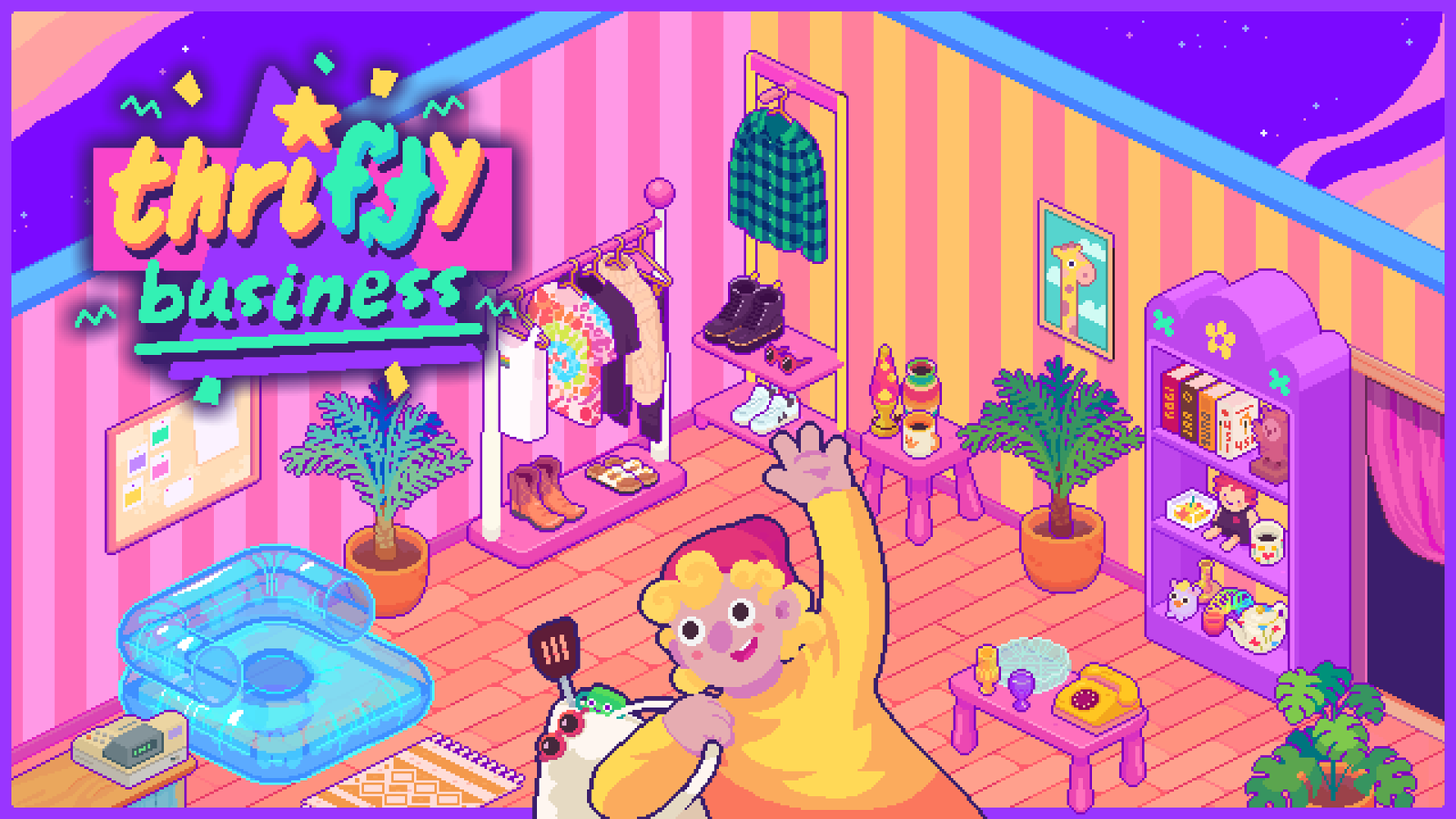
A relaxing blend of unpacking, thrift store charm, and light management that’s easy to lose hours in – held back only by a few rough edges in space and storytelling.
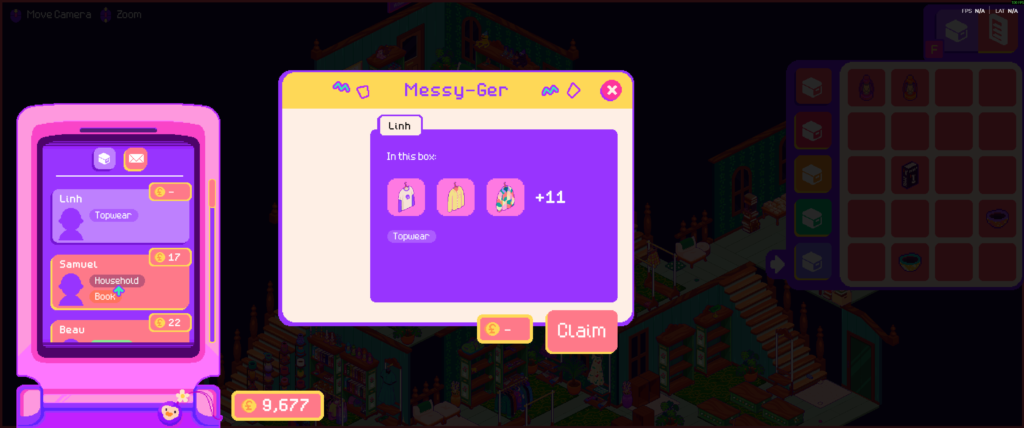
Thrifty Business is a genuinely cozy and satisfying blend of Unpacking-style organization and light store management simulation, and it’s one of those games that quietly pulls you in far more than you expect. On the surface, it looks like a simple “sort items and place them on shelves” experience, but the longer you spend with it, the more it becomes about building a rhythm. Opening boxes, discovering what’s inside, deciding how to present your shop, and slowly shaping a space that feels like your own.

The biggest strength here is absolutely the core loop. Unpacking boxes never stops being satisfying. There’s something almost meditative about revealing random thrift items and figuring out where they belong – whether that’s on a shelf, a display table, or tucked neatly into a corner that somehow just works. It hits that same “one more box” feeling that makes games like Unpacking so addictive, but adds just enough management flavor to keep it from feeling like a pure puzzle experience.
What makes the combination work is that the store management side never overwhelms the cozy vibe. You’re not drowning in spreadsheets or forced into stressful optimization. Instead, it feels more like gentle guidance – keep your store functional, keep it appealing, and slowly expand your space as you go. It’s approachable, relaxing, and very easy to sink time into without realizing it.
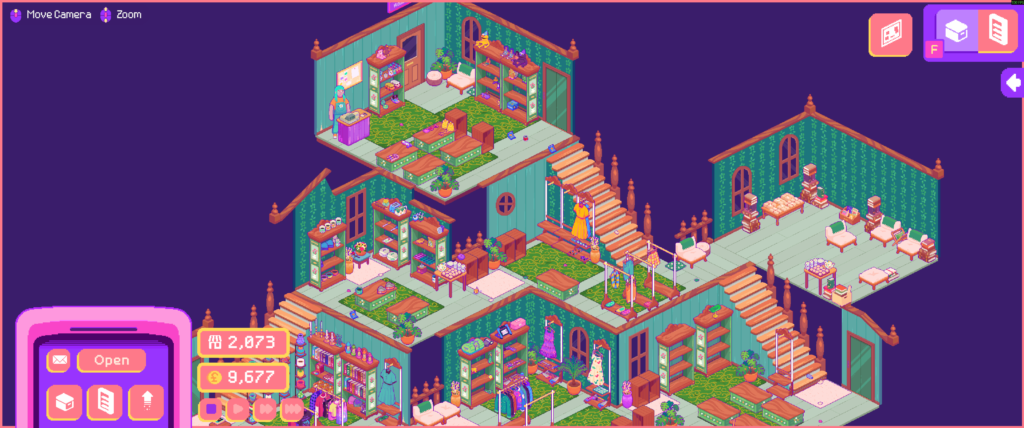
Aesthetically, Thrifty Business really stands out. The retro-inspired color palette is a huge part of its charm. It has this warm, nostalgic visual identity that makes the whole experience feel like stepping into a stylized memory of a small-town thrift store. Nothing feels overly sharp or sterile – everything is soft, inviting, and intentionally cozy. Even when your store gets a little messy, it still somehow looks appealing in that “lived-in” way. And by messy, I mean yes, you do have to pick up after your inconsiderate customers. They leave trash everywhere!
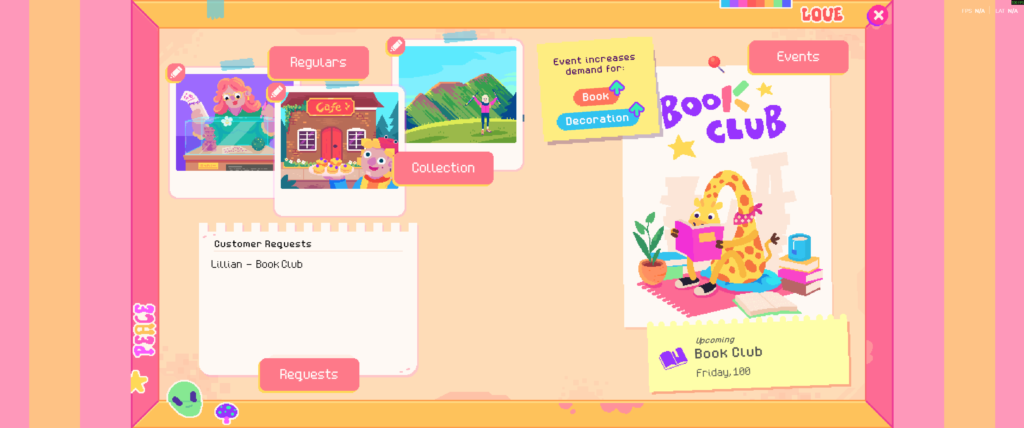
The events sprinkled throughout the game are another highlight. They do a good job of breaking up the routine and adding variety to your day-to-day loop. The best part is, you get to schedule the events as you see fit. Too many books littering your shelves when you need that valuable space for vases? Host a Book Club event to reduce some inventory! Whether it’s special customer interactions or unique situations that shake up your usual flow, these moments help the world feel less like a sandbox and more like a living space with real personality. They’re some of the most memorable parts of the game and give you a reason to keep coming back beyond just organizing shelves.
That said, there are a few areas where the experience could be stronger. The music during certain events is probably the most inconsistent element. Most of the soundtrack fits the cozy, retro tone really well, but occasionally a track kicks in that feels a little off – looking at you, Repair Cafe. Either a little too intense, too abstract, or just not quite aligned with the relaxed atmosphere the game otherwise maintains. It doesn’t ruin the experience, but it does pull you out of the vibe in moments where immersion is at its strongest. This is probably all just a personal preference.
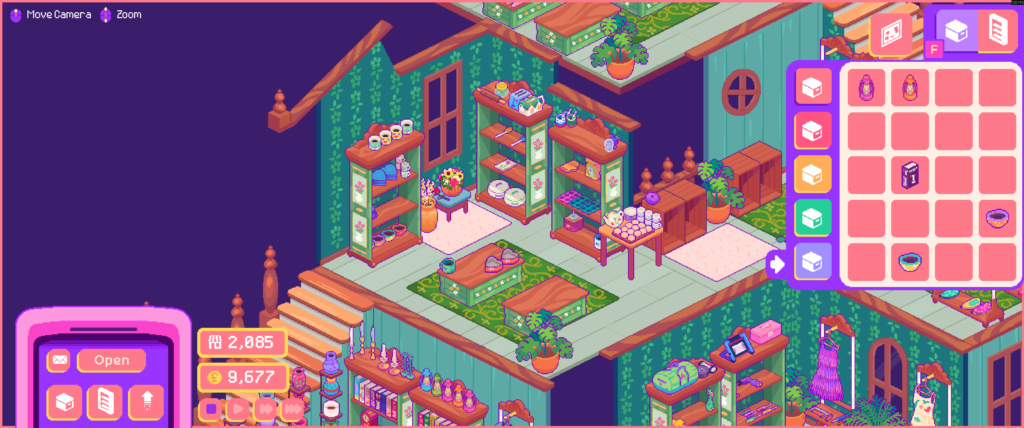
Space management is another area that could use some refinement. As your store grows and you start accumulating more items, the available shelving space begins to feel a bit restrictive. Especially if you want to keep your shop organized and easy for customers to maneuver. There’s a satisfying challenge in arranging everything neatly, but sometimes it feels like you’re fighting the layout more than working with it. A bit more flexibility – or additional late-game space options that still preserve that curated, organized look – would go a long way toward keeping the creative side flowing smoothly. I would even like to see an actual storage room, instead of keeping all the extra items in my inventory.
On the narrative side, there’s definitely room to expand. The game hints at personality through customers, events, and evolving store environment, but it often feels like it’s stopping just short of something deeper. A stronger throughline or more developed story beats would elevate the experience significantly. I want to know more about the folks in the Grief Support Circle, or hear more about the history between Ingrid and Archie. Even small narrative arcs tied to recurring customers or the history of the shop would make the world feel more grounded and emotionally engaging.
Despite those issues, the foundation here is incredibly strong. Thrifty Business understands what makes cozy organizational games so compelling and builds a surprisingly addictive loop around it. It’s the kind of game you load up intending to play for a short session and suddenly realize an hour has disappeared into arranging shelves “just a little better.”
It’s not trying to be overly complex or stressful, and that restraint is part of its charm. What it does well, it does very well – atmosphere, satisfying organization, and a relaxing pace that invites experimentation rather than pressure.
Score: 8/10
With a bit more polish on audio, expanded shelving flexibility, and a deeper narrative layer, this could easily push from a strong cozy sim into something even more standout in the genre. I also just really want to know what’s going on with that pond space that’s floating out in the void. Spa Day/Zen Room in the future, perhaps? Wouldn’t that be neat!
Fun for all ages.
Pros:
- Extremely satisfying unpacking and organization gameplay loop
- Great combination of Unpacking-style gameplay and store management mechanics
- Cozy, relaxing experience that never feels overly stressful
- Attractive retro-inspired color palette and visual style
- Fun variety of items to discover and display
- Events help keep gameplay fresh and break up the routine
- Easy to pick up and enjoy for both casual and simulation fans
- Creating and customizing your store is genuinely rewarding
- Strong atmosphere that encourages long play sessions
Cons:
- Some event music feels off compared to the rest of the soundtrack
- Shelving and display space can be restrictive as your inventory grows
- More organization options would help larger stores feel less cramped
- Story elements feel underdeveloped and could use more depth
- Customer interactions and narrative threads don’t go as far as they could
- Late-game progression could benefit from additional goals and content
- A few quality-of-life improvements would make store management smoother









Your Choices Shape A Lifetime: Cozy Decorator Game, Momento, Out Now On Steam
[…] REVIEW: Thrifty Business – A Cozy Time Capsule of Sorting, Selling, and Slow-Burning Satisfact… […]