


Posted by: Gianna Cosimini | March 20, 2026 | Roguelite, Strategy

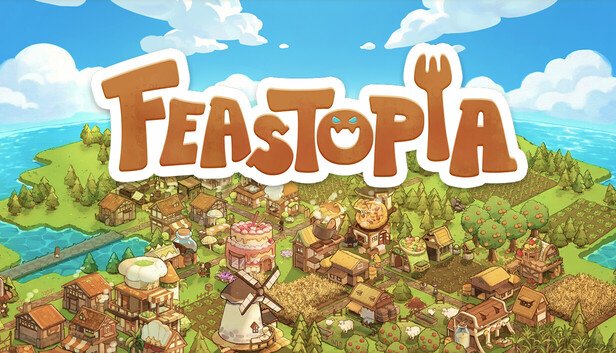
If you happened to stumble upon Feastopia on Steam and thought, “Oh, look at that cute little egg and the pastel colors, this must be a relaxing weekend builder”, I have some news for you: it is a beautiful, delicious, and incredibly high stakes challenge.
Developed by White Star Studio, Feastopia is best described as a ‘roguelite culinary city builder’. While it draws some mechanical inspiration from titles like ‘Against the Storm’, it swaps the dark, rainy apocalypse for a bright, gourmet focused fantasy world. You play as a contractor who has signed a pact with a mysterious egg that fell from the sky. Out of this egg pops Dango, a gluttonous little deity who is essentially the heartbeat and the ticking time bomb of your settlement.
The Gameplay Loop: Feed the God, Save the Town

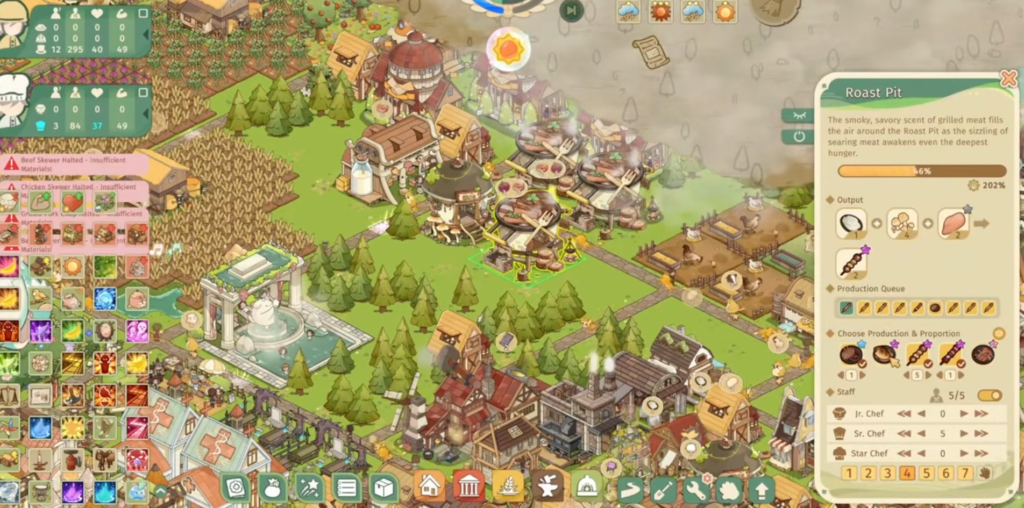
The core of the game is managing two competing forces: Contentment and Wrath. Your goal is to fill the blue contentment bar before the red wrath bar reaches the top. To achieve this, you have to be the best chef architect the world has ever seen.
You start with the basics: planting onions and cucumbers, but as Dango evolves through his four different forms, his palate becomes… let’s say ‘refined’. Soon, he’s demanding complex recipes that require intricate production chains. You aren’t just building a town, you’re building a massive industrial kitchen where the customers have the power to level your civilization if their appetizers are late.
The roguelite elements come into play through blueprints. Every time you need to expand, you’re offered a randomized selection of buildings. This is where the strategy gets deep. You might desperately need a bakery to make chiffon cake, but the game offers you a furniture workshop instead. Success depends on how well you can pivot your entire economy based on the ‘hand’ you’re dealt.
The Highs: Art and Ambience

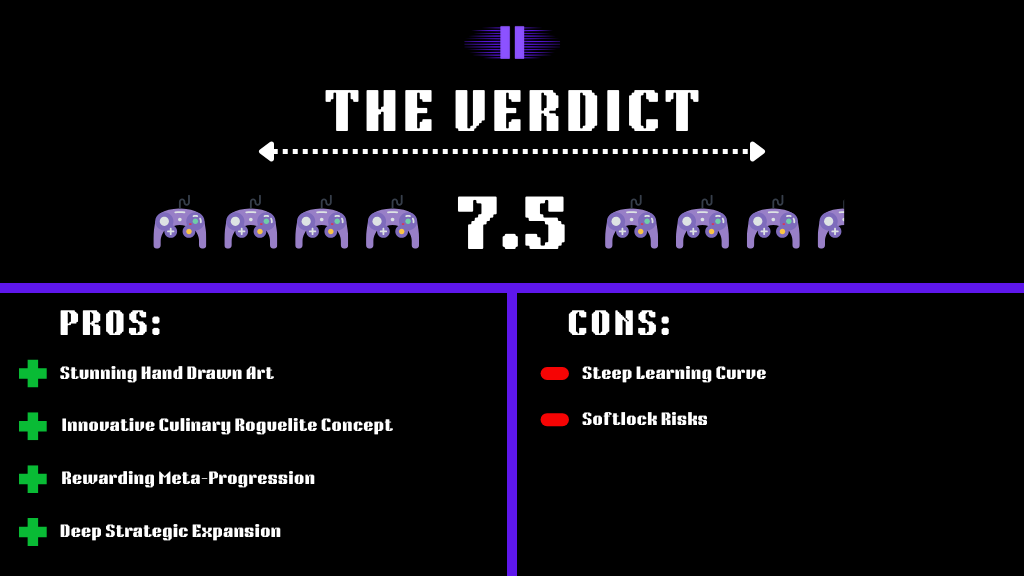
Visually, the game is a total standout. The hand-drawn, chibi-style art is stunning. The dumdum couriers, these little bird creatures that lug baskets of food around, are genuinely adorable and add a lot of personality to the streets. It’s a very cozy aesthetic that does a lot of heavy lifting to keep the mood bright even when the pressure is on.
The progression system also feels so rewarding. There is a meta-progression tree where you can unlock permanent buffs and new recipes between runs. It makes even a failed run feel like you’ve accomplished something, which is a hallmark of a well designed rogue-lite.
The Challenges: The Learning Curve and Resource Management
While the presentation is sweet, I have to be honest about the difficulty. This game is tough, which isn’t necessarily a bad thing. The jump from the initial tutorial steps to the actual trials can feel quite steep.
One of the more frustrating aspects for a newcomer is the risk of a ‘soft-lock’. Since blueprints are randomized, it is entirely possible to accidentally skip over building materials like bricks or windows early on. If you do that, you might find yourself in a position where you literally cannot build the structures required to progress, leaving you to watch the wrath meter climb while you’re helpless to stop it.
There are also some minor technical ‘rough edges’, some text remains untranslated in certain menus and the mouse cursor can feel a bit finicky when you’re trying to select specific buildings in a crowded block.
Final Verdict
Feastopia is a fantastic choice if you love strategy games that demand your full attention. It’s perfect for players who enjoy the replay aspect in roguelites, but want a theme that isn’t just dark dungeons and monsters.
It’s a bit of a pastel colored panic, but once you get over the initial learning curve and figure out how to prioritize your production chains, it becomes incredibly satisfying. Just remember: keep Dango full, or the consequences for your town will be swift.
Maturity Rating:
E for Everyone





















Topdeck Automat, The Printer Vs. Aliens Auto-Battler, Playtest Is Live
[…] 3 Ingredients for Success: Why Feastopia is a Deceptively Sweet Strategy Pressure Cooker […]